Enhancing Solids Handling in the city of Winnipeg’s new Primary Scum Dewatering Building
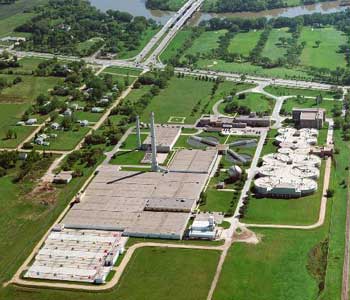
Winnipeg’s North End Water Pollution Control Centre (NEWPCC) is undergoing one of the largest and most transformative wastewater infrastructure upgrades in North America. As part of this modernization effort, the city is building a new primary scum dewatering building.
Primary scum contains fats, oils, grease (FOG), rags, wipes, and floatable debris skimmed off the surface of primary clarification. Historically, this material has been pumped directly to anaerobic digesters.
While this is a common practice at wastewater treatment plants, it can lead to process instability, foaming, reduced digester capacity, and elevated maintenance needs.
To address this, the city opted to build a dedicated primary scum dewatering building equipped with dewatering presses to dewater the clarifier scum and deposit the dewatered product into roll-off containers to be taken to the local landfill for disposal.
Laboratory Validation and Pilot-Scale Performance
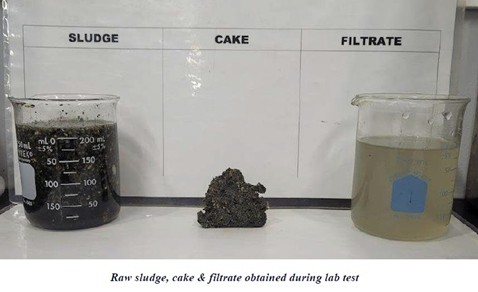
Winnipeg’s Design Engineering Firm, Aecom, first approached Fournier Industries to explore the use of the Rotary Fan Press technology in this application. A structured testing program was implemented to confirm the suitability of the Rotary Press for dewatering primary scum, beginning with laboratory analysis and progressing to full pilot-scale validation. Laboratory testing demonstrated favorable sludge characteristics and projected a dewatered solids dryness of approximately 67% TS.
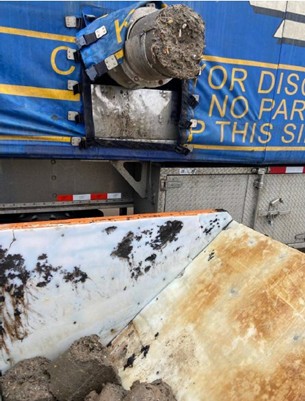
The next step was to get a mobile Fournier Pilot unit to site to confirm full-scale performance. During piloting, the Rotary Press demonstrated stable, continuous discharge of a cohesive, stackable cake with minimal free water present, indicating controlled operation and effective dewatering despite grease variability. Pilot results achieved average dewatered solids dryness of approximately 67% TS with a solids-capture-rate approaching 99%, validating the technology’s performance and supporting its suitability for full-scale implementation and long-term operation.
Bench-Scale Dewaterability Testing Results
Pilot Trailer Final Dewatered Product
Purpose-Built Equipment Selected for the Upgrade
With the core dewatering technology selected, the dewatering building design proceeded to select other critical equipment to ensure reliable operations.
Vaughan Dry-Pit Chopper Pumps
Horizontal and vertical Vaughan chopper pumps were selected to transfer and pre-condition the scum stream. Designed to handle wipes, plastics, stringy debris, and FOG, the pumps use industry leading chopping technology to prevent clogs. Their reliability ensures a consistent, conditioned feed to the dewatering system and accomplishes the project’s requirement for durable, non-plugging solids-handling pumps.
Fournier Rotary Press Dewatering System
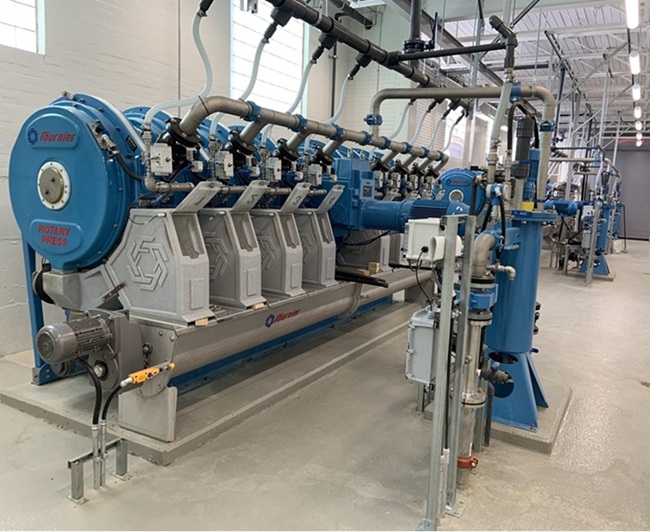
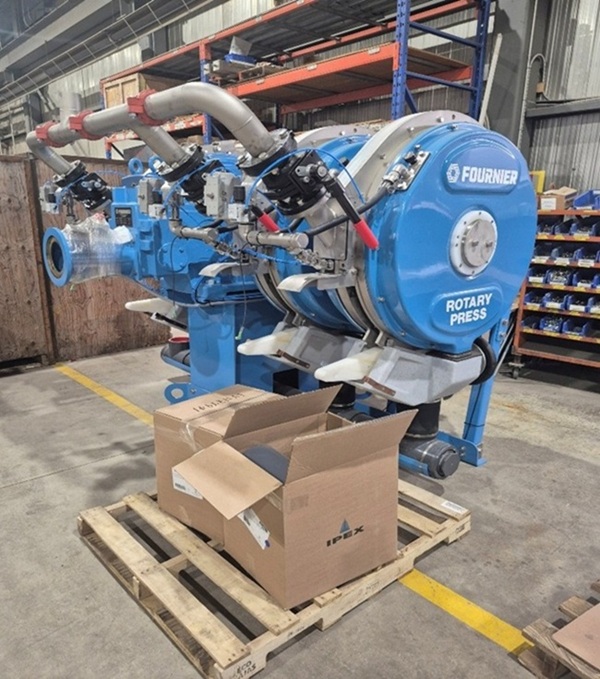
The Fournier Rotary Press forms the core of the new dewatering process. Two stainless steel 3(4)-900/4000CVP presses—one duty, one standby—were selected for redundancy and future capacity. The system was designed to process 6.7 m³/h at 5% solids, achieving ≥50% cake dryness and ≥95% solids capture. Pilot testing at NEWPCC exceeded these expectations, routinely producing 65–70% cake dryness with low wash water demand. Its enclosed, slow-speed operation offers dependable, low-maintenance performance ideal for scum handling.
Press Fabrication Complete /
Ready to Ship to Site
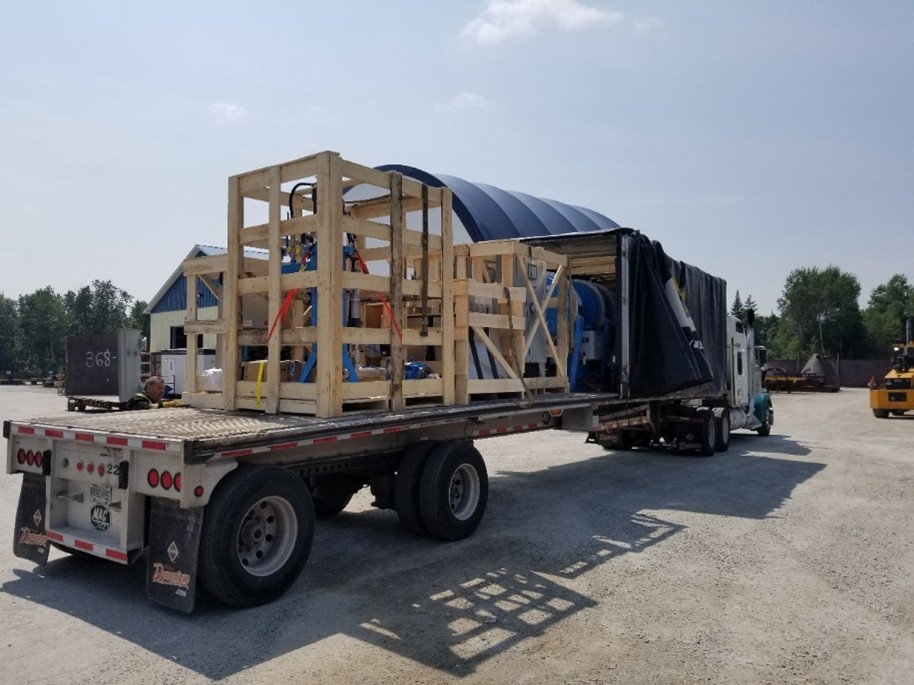
Presses Loaded / Headed to Winnipeg
JDV Level Lodor™ LL-20 Units
The dewatered scum is discharged into roll-off bins using two JDV Level Lodor™ LL-20 units. These systems provide consistent and controlled loading by automatically spreading and leveling the contents as the bins fill. The enclosed design helps contain odours, reduces housekeeping needs, and minimizes operator exposure, making day-to-day operations and handling more efficient. The LL-20 units support predictable solids management and ensure bins are filled evenly, which improves hauling efficiency and overall site cleanliness.
Project Completion Update
This dewatering building is currently under construction and is slated for commissioning in 2027.